
Lier is one of those towns that’s easy to overlook and hard to forget. It has the charm of a historic city, but at a pace that actually lets you take it all in. Here are my five reasons why I love Lier and why it deserves a spot on your Belgium list.

1. The Zimmer Tower
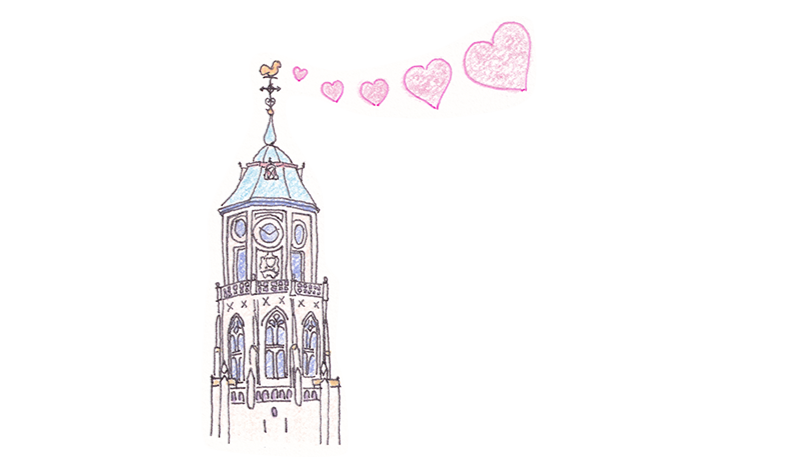
If Lier has a face, it’s this one. The Zimmer Tower started life as a medieval fortified tower, part of the old city walls.
In 1930, Louis Zimmer gave it a second life by adding his Jubilee Clock. It’s a central dial surrounded by twelve smaller ones. Each shows a different natural cycle, like the moon’s phases or the tides.

2. A beguinage where time stood still
Lier’s beguinage once was a city within the city. Its cobbled streets and little houses could only be reached through its gates, and those gates were locked every night.
The gates are still there today, and they make lovely photo spots.

3. Nature right on the city’s doorstep
Here’s something special: today’s Lier is barely bigger than the medieval town. In most cities, the historic centre is wrapped in suburbs. In Lier, you can step straight from the streets into nature, just like people did centuries ago.
Head northeast for the nature area of Nazareth, or southwest for Anderstad. rom the Grote Markt, Nazareth is only about a 10-minute walk, and Anderstad about 15 minutes.”

4. Easy to reach by train
No car? No problem. Antwerp is just 20 minutes away by train, and there are direct connections to Leuven and Hasselt too. On weekdays, you can also hop on a direct train to Mechelen (Malines) and Brussels. On weekends you’ll need to change trains for those two.
From the station, it’s an easy walk into the historic centre. Check the NMBS/SNCB journey planner for current times before you go.


5. The stores have beautiful windows
Shopping in Lier comes with a view. Its shopping streets were badly damaged in the First World War. Instead of copying the old buildings or going fully modern, Lier rebuilt them in a Baroque-inspired style, using modern techniques.
That’s how the streets got their beautiful shop windows: Baroque-style façades with windows far bigger than anything the real Baroque period could manage, when glass only came in small panes. So while you browse, look up as well as in.